Drone Response Checklist: What to Do on Private vs. Public Property

Know what to assess, how to respond, and what to document when a drone is detected.
expert video

Drone Response for Security Teams

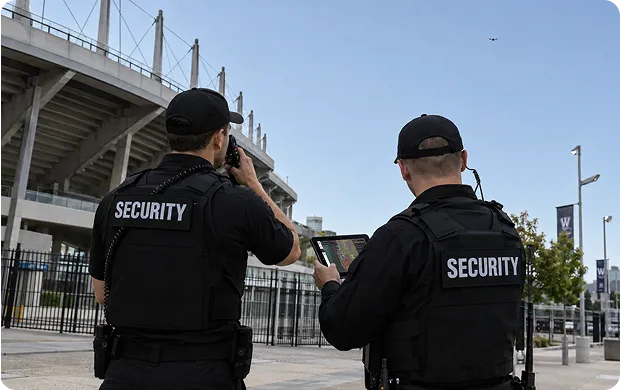
A drone alert is only the beginning. Your team needs a clear process for assessing the situation and determining an appropriate response, including when the pilot is located on public versus private property.
In this four-minute video, Covered 6’s Mike Grant, Chief Operations Officer, and Adam Rider, Director of Drone Operations, walk through a drone response checklist. They share considerations to help security teams at stadiums, universities, corporate facilities, and outdoor events prepare for drone incidents.

IN THIS VIDEO

What You’ll Learn

Explore practical drone response strategies, from detection to incident reporting and team readiness.
How Covered 6 Approaches Drone Response
Learn how their team helps organizations develop practical response procedures.
What to Do When a Drone Is Detected
Review the steps from an initial alert through situational assessment.
Why the Pilot’s Location Matters
Explore response considerations when an operator is on public versus private property.
What to Document
Understand what information supports internal reporting and coordination with law enforcement.
How to Prepare
Learn proactive measures to reduce disruptions and improve your team’s readiness.

Drone Response: Private vs. Public Property

Learn how to manage drone incursions effectively and within regulatory guidelines, with clear guidance on jurisdictional rights and the legal differences between responding on private property and in surrounding public areas.

About Covered 6

Covered 6 provides training and consulting informed by experience in law enforcement, the military, the legal community, and corporate security. Their team helps organizations improve situational awareness and develop practical security and drone response procedures.
Covered 6