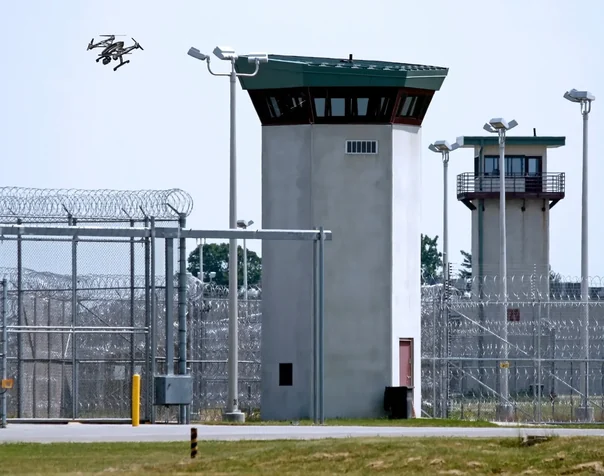
Powerful Remote ID Receiver solution. Practical price.
REMOTE ID DRONE DETECTION
Meet the AirWarden Remote ID Solution
Under the Federal Aviation Administration (FAA) Remote ID mandate, drones must continuously broadcast operational data.
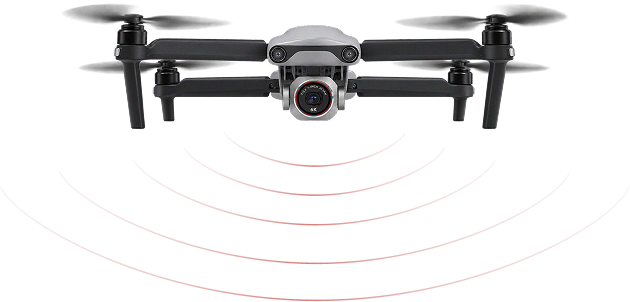
AirWarden Remote ID is a cost-effective, subscription-based detection solution that pairs a high-precision Remote ID receiver with AirWarden Essentials software.
Under $10K
AirWarden Remote ID makes effective drone detection accessible for under $10K per location.
Installs in Minutes
Plug-and-play setup with no calibration required. We provide the hardware, mounting equipment, and power supply.
HOW IT WORKS
Know What’s Flying in Your Airspace
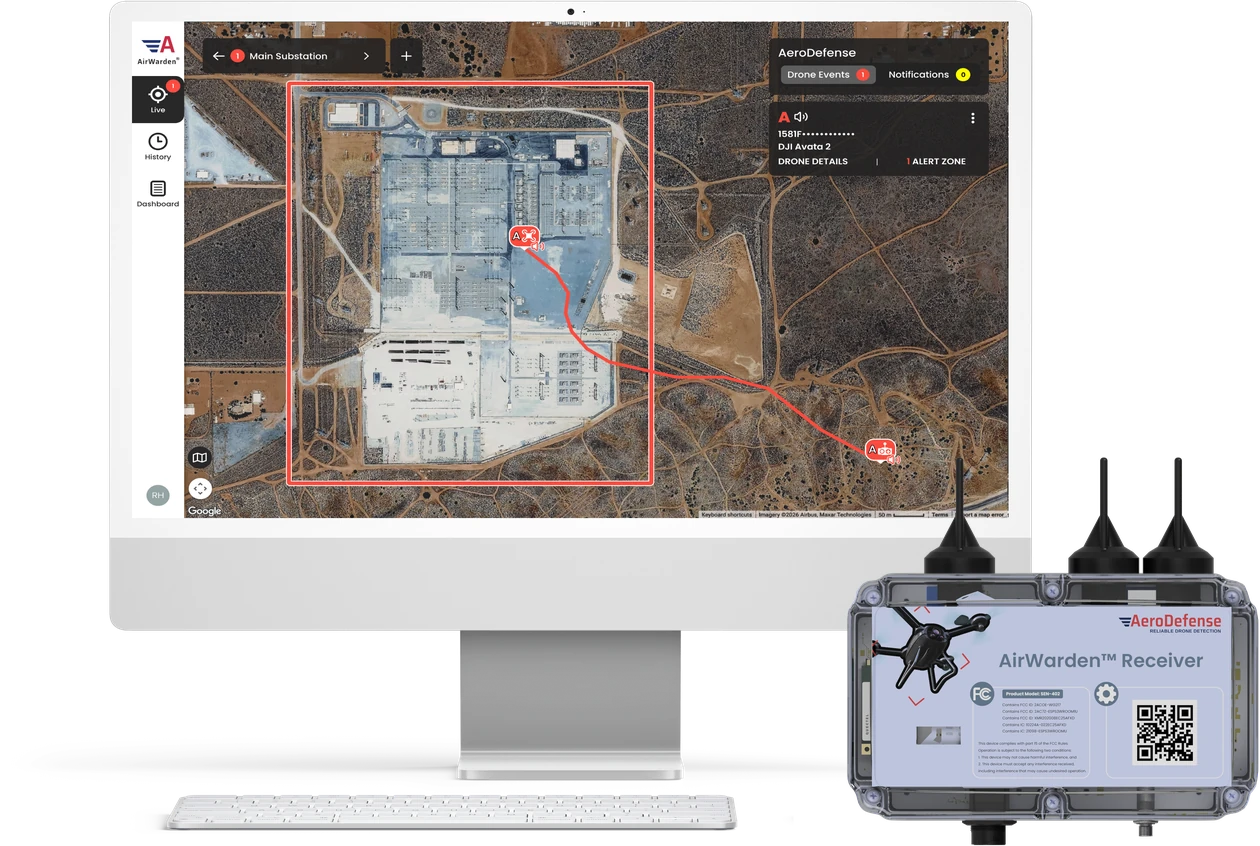
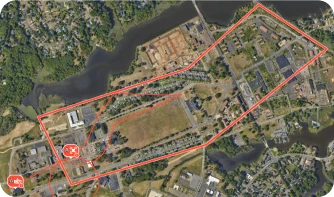
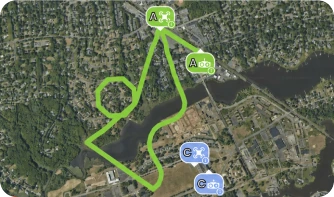
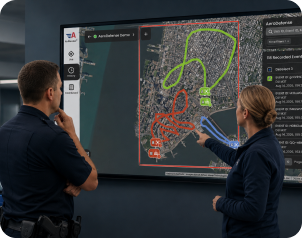
Your AirWarden Remote ID receiver captures drone broadcasts and delivers identification, location, and flight data to AirWarden Essentials software. Set custom alert zones around your facility and receive notifications when broadcasting drones enter those zones.
Drone & Pilot Location
Real-time GPS tracking
Flight Telemetry
Speed and altitude
Drone Identifier
Serial number for reporting
Who Needs AirWarden Remote ID?
Security Teams and Government Agencies
AirWarden Remote ID gives security teams and government agencies an affordable, effective way to monitor drone activity in their airspace, without the high costs of other detection systems that can reach hundreds of thousands or even millions of dollars.
UAFR-Eligible Critical Infrastructure Facilities
Under the FAA’s proposed Unmanned Aircraft Flight Restriction (UAFR) rule, eligible facilities would need Remote ID receiving capability. AirWarden Remote ID helps meet that proposed requirement while giving security teams visibility into broadcasting drones near their sites.
UAFR READINESS
Prepare for the Proposed FAA Flight Restrictions (UAFR)
The proposed UAFR framework will allow eligible facilities across the nation’s 16 critical infrastructure sectors to request FAA-enforced drone flight restrictions. Pilots who violate an approved restriction could face civil fines of up to $75,000 per violation, pilot certificate suspension or revocation, and, where applicable, criminal prosecution.
1
RECEIVE REMOTE ID BROADCASTS
The proposed rule calls for applicants to be capable of receiving Remote ID broadcasts to support the requested UAFR.
2
COLLECT DRONE HISTORY DATA
The proposed application calls for up to 24 months of available drone activity history over the facility. Build that record now before applications open.
3
PREPARE FOR DAY-1 READINESS
The FAA expects high application volume. Remote ID receiving capability and available flight data can help your facility apply as soon as the process opens.
Includes a plug-and-play Remote ID receiver and AirWarden Essentials software for one location, with live monitoring and an interactive dashboard for detailed flight trends. Add subscriptions for additional locations and monitor them all from one screen.
$9,987
/Annually
WHO IT’S FOR
Drone Awareness Across Industries
AirWarden Remote ID provides reliable drone awareness across critical facilities, public spaces, and high-security environments.
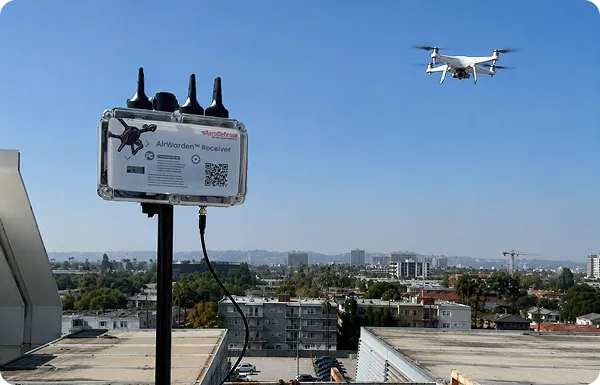
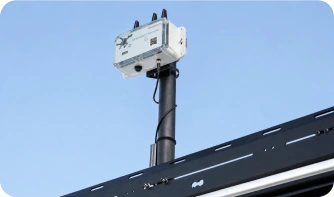
The small AirWarden Remote ID Receiver, weighing approximately five pounds, installs on a pole with no technical experience needed and automatically connects to the cloud-based software over
LTE or Ethernet.
Temporary Deployment
Everything You Need
We provide the hardware, mounting equipment, and power supply, so all you have to do is choose your installation location, mount the device and plug it in!
AirWarden Remote ID detects drones that broadcast Remote ID, providing reliable, real-time visibility for effective airspace awareness and monitoring.
If you’re facing a known or suspected bad actor using modified or non-compliant drones, AirWarden Spectrumoffers advanced detection capabilities to meet that challenge.
meeting REQUEST
Talk to Sales
AirWarden Remote ID delivers enterprise-grade airspace awareness at a fraction of the cost of traditional drone detection systems.
Easy to deploy and scale, it supports everything from one facility to dozens of sites. Starting at $9,987 per site annually, it’s a cost-effective solution for organizations looking to strengthen airspace security.
Whether you’re protecting a single site or managing security across multiple locations, a quick meeting will show how AirWarden Remote ID can work for your organization.
FAQ
AirWarden Remote ID FAQs
Find answers to common questions about AirWarden Remote ID, from Remote ID detection and real-time alerts to multi-site monitoring, reporting, and data privacy.
Didn't find your answer? Chat with the AeroDefense Navigator for immediate assistance.
How does AirWarden Remote ID help me detect and track nearby drones?
AirWarden Remote ID is a scalable cloud-based airspace monitoring platform that delivers real-time drone awareness and deep historical analytics. How It Detects: AirWarden Remote ID receivers capture FAA-mandated Remote ID broadcasts (via Bluetooth/Wi-Fi) to track live drone telemetry and exact pilot location. Beyond Real-Time Alerts: It logs historical flight paths and tracks recurring patterns to help security teams spot trends and security anomalies
over time.
Is AirWarden Remote ID right for my facility or industry?
AirWarden Remote ID is designed for commercial and government entities who need simple, scalable, cost-effective, cloud-based airspace awareness.
Can I monitor drone activity across multiple sites or properties at once?
Yes. It features an enterprise-ready dashboard that consolidates real-time drone and pilot tracking data across multiple sites into one centralized interface. Deployment locations are organized into alert zones.
How will I be alerted to drone activity, and what report data do I get?
Real-Time Alerts: Delivers immediate audio, visual, SMS, and email notifications with live GPS mapping of both the drone and pilot, alongside altitude, speed, and serial number. Historical Reporting: Tracks past flight paths, logs flight volume trends by hour, and identifies repeat offenders—exportable as PDF or CSV reports.
Will my physical location or receiver setup be hidden from the public?
Yes. AirWarden Remote ID receiver locations are not broadcast publicly.
Is my airspace data kept private and secure from other users?
Yes. Your account data, custom alert zones, live alerts, and security reports are strictly private to your organization. Private Dashboard: Other users cannot log into your account or view your specific airspace alerts and reports. Shared Signal Range: While sensors in a region work together behind the scenes to track drone signals across a wider area, your private user settings and security details are never exposed to other customers. You Control Access: You choose whether or not to share your live feed or reports with outside partners, such as local law enforcement.