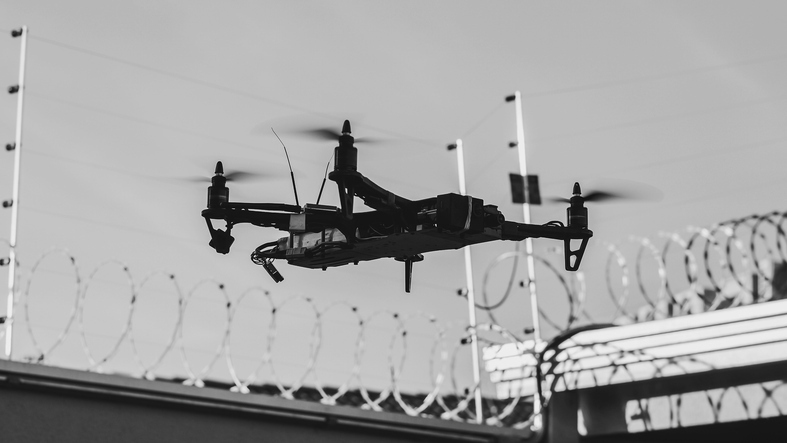
Correctional Facility Drone Detection

See how AirWarden® helps disrupt and deter drone-borne contraband.
Out of numerous tests with other drone detection equipment from virtually all the big companies that have drone detection technologies, AeroDefense stands apart from others. The system always detects and never fails. The support received is also phenomenal.
Georgia Department of Corrections
THE PROBLEM

Airspace Awareness Gaps & Resource Drain

Contraband Smuggling & Safety Hazards
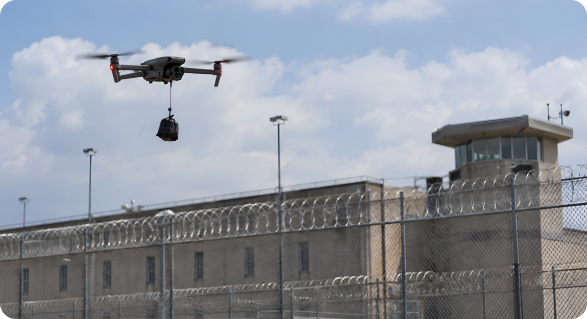
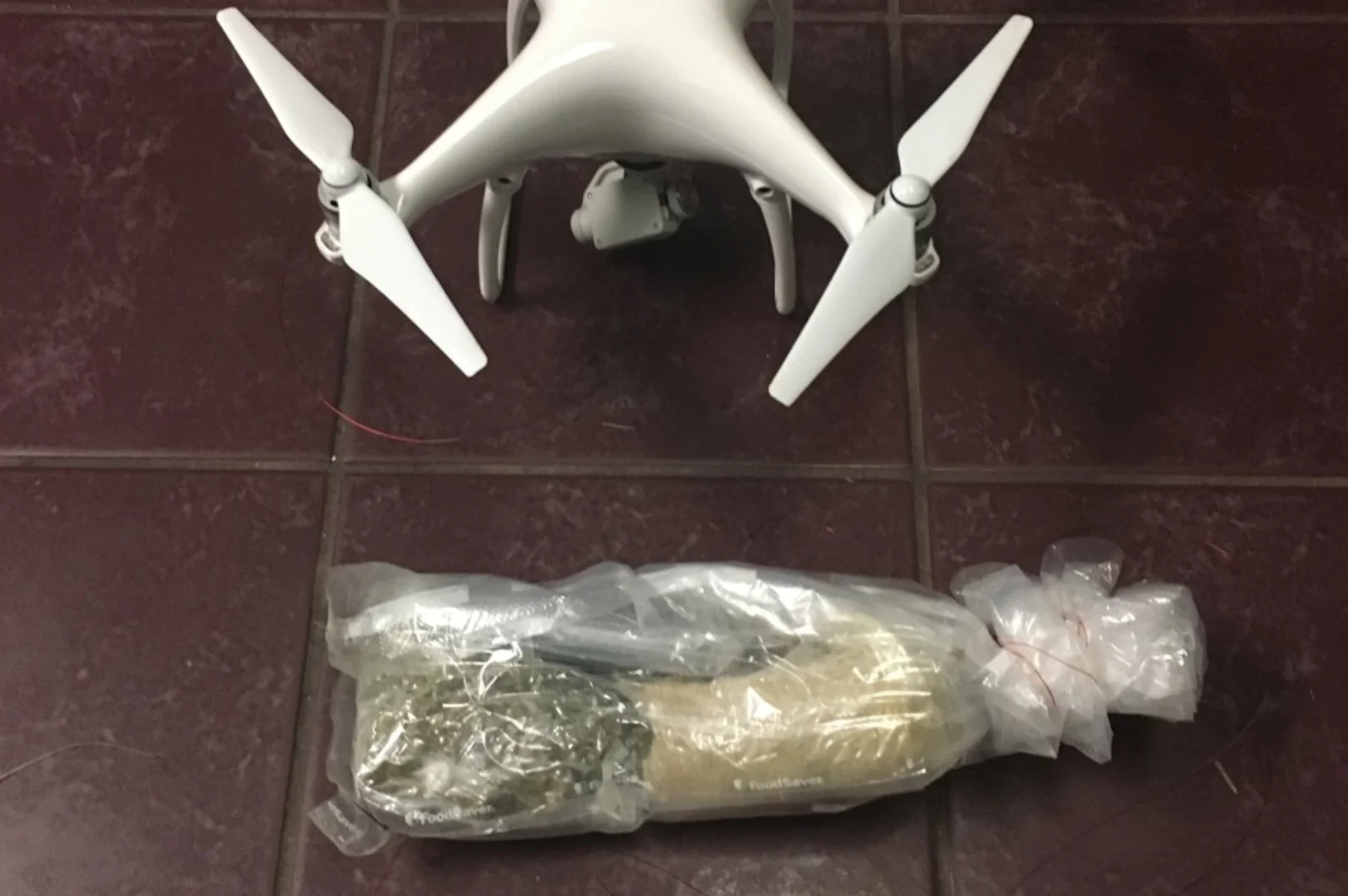
Drones bypass ground security in under 60 seconds to deliver narcotics, cell phones, and weapons—fueling underground inmate markets and directly threatening staff safety.
Perimeter Surveillance & Incursion Planning
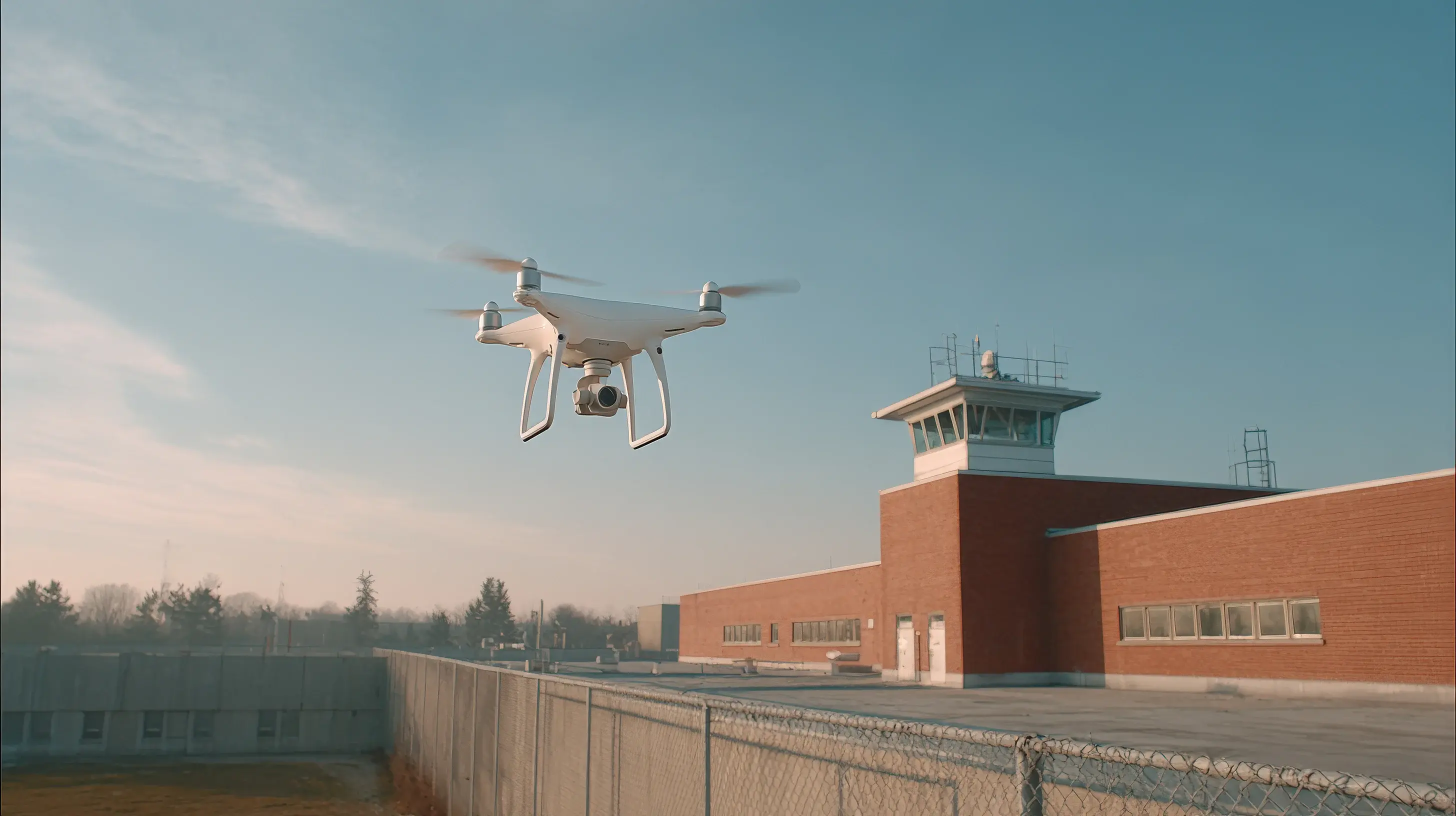
Criminal rings use aerial footage to map camera blind spots and track guard rotations, allowing them to schedule high-success contraband drops from changing off-property launch sites.
Staff Exhaustion & False Alarms
Relying on manual human observation creates a major resource drain. Officers waste critical time and trigger costly lockdowns chasing birds or planes, while real pilots remain undetected.
THE SOLUTION

Proactive Airspace Defense

AirWarden gives you the data you need to disrupt contraband operations and deter future incidents.
Deterrence Through Detection
Reliable, accurate alerts allow for rapid responses—such as targeted lockdowns—that discourage smuggling rings from attempting future drops.
Stop the Source
By identifying the drone and pilot simultaneously, AirWarden shifts your team from a defensive posture to an offensive one, targeting the operator responsible for the incursion.

The AirWarden Response Lifecycle

A continuous approach to drone security before, during, and after an incident.
Phase 1
Continuous Monitoring
Before an Incident
24/7/365 Monitoring
Constantly monitor your environment with zero manual oversight required until an alert is triggered. 
Configurable Alert Zones
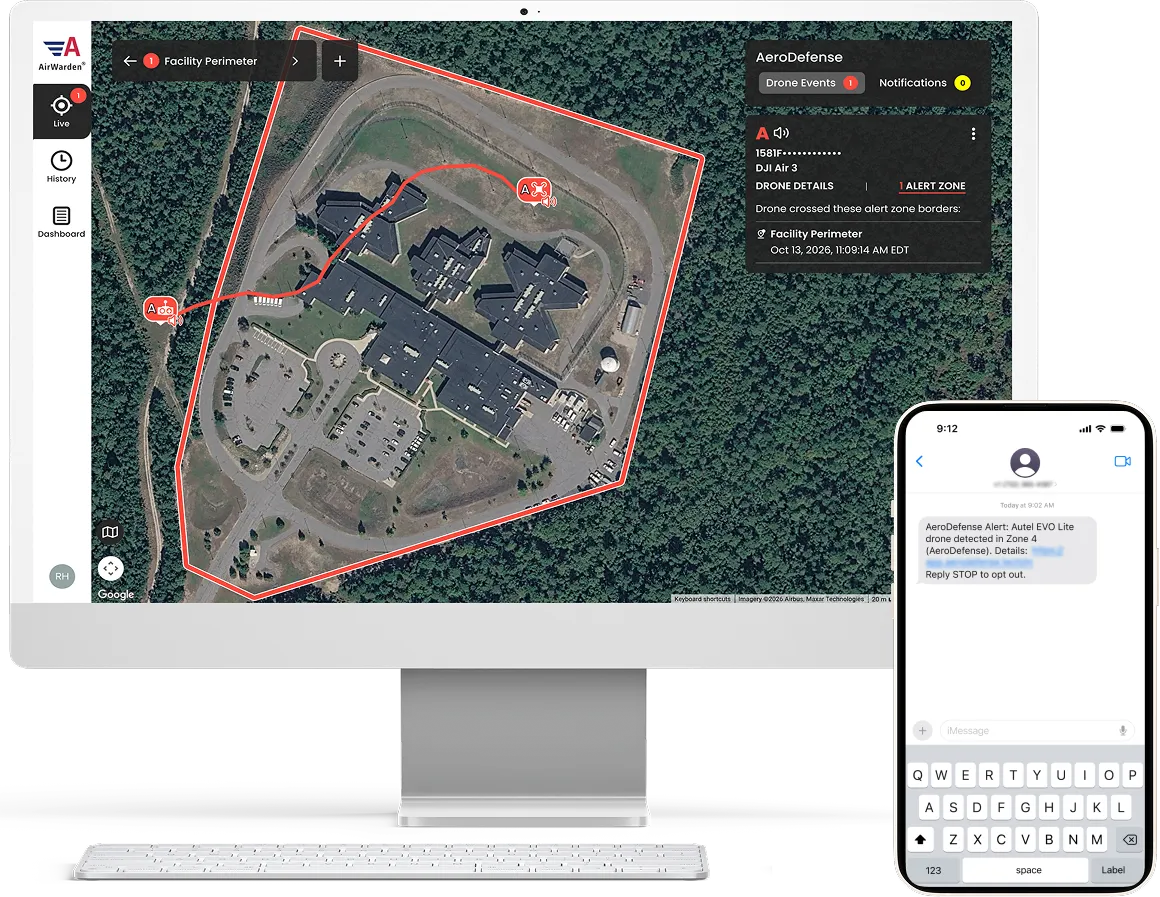
Set up personalized zones so you only receive alerts (text, email, or audio) when a drone or controller enters the specific area(s) you care about most.
Multi-Site Airspace Management
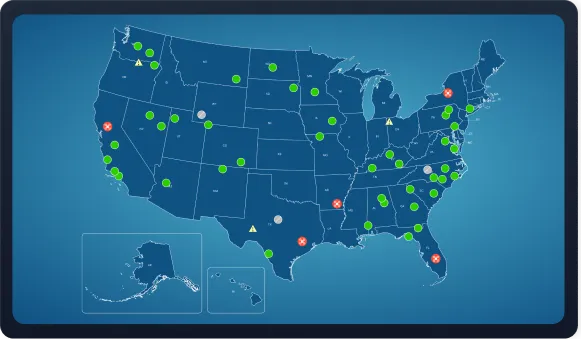
Monitor multiple facilities from a single command console screen for streamlined agency-wide visibility. 
Phase 2
Immediate Action
During an Incident
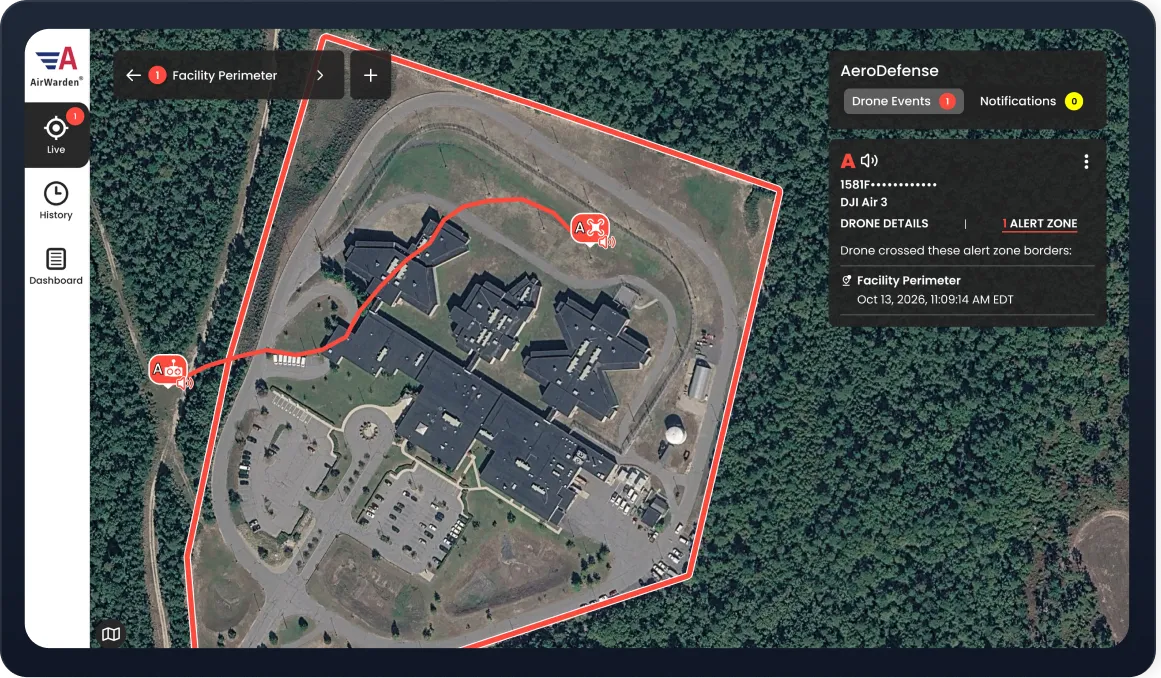
Simultaneous Drone & Pilot Tracking
Eliminate the guesswork by seeing the exact real-time location of the offending drone and the pilot on a single map.
Broad-Spectrum Detection
Detect diverse drone models across major manufacturers to maintain complete airspace visibility.
Coordinated Response
Automatically alert internal security teams and local law enforcement simultaneously for a synchronized apprehension effort.
Flag Watchlist Threats (AirWarden Remote ID Only)
Add drones to a custom Watchlist during an active flight or directly from historical logs to immediately flag them upon re-entry.
Phase 3
Tactical Analysis
After an Incident
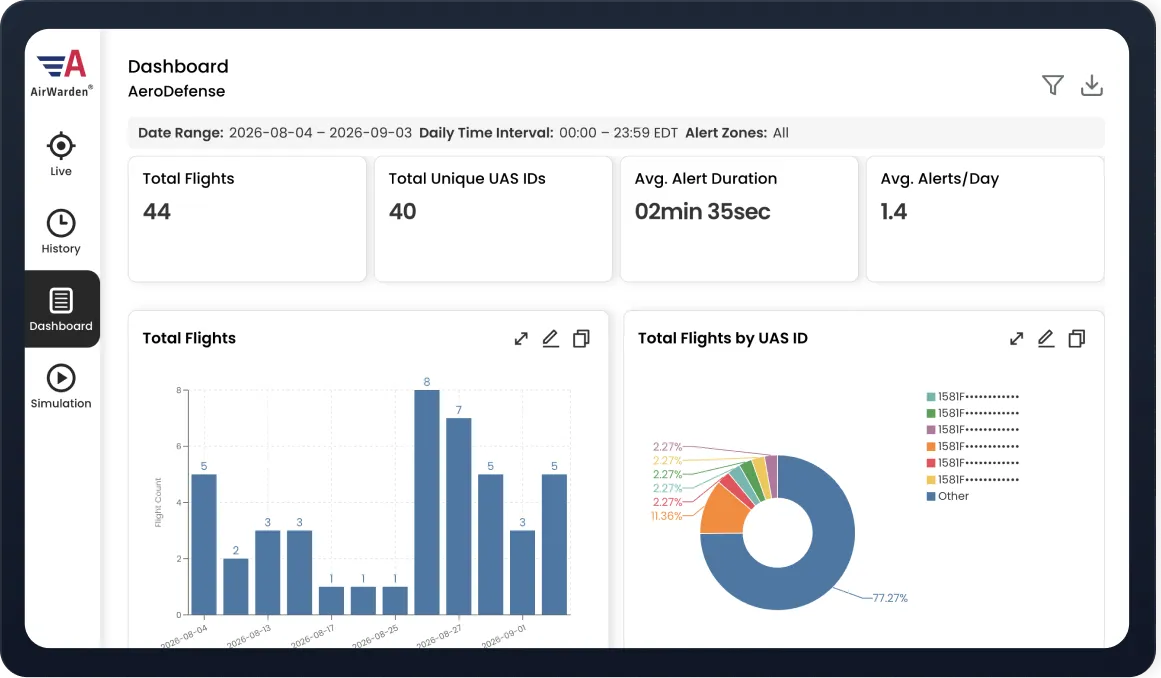
Historical Pattern Recognition
Use detailed post-incident reports to identify smuggling schedules, common launch points, and recurring flight paths and repeat offenders.
Predictive Prevention
Leverage forensic data to strengthen your perimeter and predict future incursions before they happen.
Evidence for Prosecution
Access high-fidelity flight logs and signal data needed to support the legal prosecution of contraband smugglers.
UAFR READINESS

Prepare for the Proposed FAA Flight Restrictions (UAFR)

The proposed Unmanned Aircraft Flight Restriction (UAFR) framework will give eligible facilities FAA-enforced airspace protection. Operators who violate an approved restriction face civil fines up to $75,000 per infraction, license suspension, or criminal prosecution.
Eligible facilities include state felony correctional institutions and federal, local, tribal, territorial, or private facilities capacity-rated for 500+ inmates. AirWarden delivers the passive Remote ID monitoring needed to support your facility’s FAA application preparation.
1

RECEIVE REMOTE ID BROADCASTS

The proposed rule calls for applicants to be capable of receiving Remote ID broadcasts within or in close proximity to the requested UAFR.
2

COLLECT DRONE HISTORY DATA

The proposed application calls for up to 24 months of available drone activity history over the facility. Build that record now before applications open.
3

PREPARE FOR DAY-1 READINESS

The FAA expects high application volume. Remote ID receiving capability and available flight data can help your facility apply as soon as the process opens.
Ask AeroDefense Navigator About UAFR

Choose the Right Protection Level for Your Facility 

See how AirWarden Remote ID and AirWarden Spectrum compare. Both solutions include AirWarden Essentials software for live monitoring, configurable alerts, fleet management, watchlists, and historical reporting.
AirWarden Remote ID
AirWarden Spectrum (RF Sensing)
Best For Facilities that need affordable, scalable drone monitoring with fast deployment.
How It Works Receives real-time Remote ID data from drones and their pilots.
Hardware & Setup Compact, self-installable receivers with no technicians or calibration required.
Primary Advantage Scales cost-effective, wide-range coverage with rapid deployment to track exact drone and pilot locations.
Explore Remote ID
meeting REQUEST

See AirWarden in Action for Correctional Security

Correctional facilities across Georgia and the U.S. have used our technology to intercept hundreds of thousands of dollars in contraband.
Request a meeting to see how our technology delivers real-time drone and pilot tracking data, helping your security team identify potential threats earlier and take informed action when it matters most.
Thank you! Your submission has been received!
Oops! Something went wrong while submitting the form.

Success Story: Georgia Department of Corrections

Advanced Detection Since 2017 helping correctional facilities respond to drone threats.
Since 2017, AirWarden has helped the Georgia Department of Corrections identify and track unknown drone activity, enabling earlier, data-backed interceptions.
$500,000+ in Contraband Seized
Georgia officials have used AirWarden to intercept over half a million dollars in illegal contraband.
Multiple Suspects Apprehended
The system’s ability to pinpoint pilot locations has led directly to multiple arrests and successful prosecutions.
Expanded Across Multiple Facilities
What began as a pilot is now active across multiple facilities, delivering statewide airspace intelligence.
BLOG
drone-contraband
Drone Contraband in Prisons: A Guide to Detection and Prevention for Correctional Leaders
AeroDefense Chief Marketing Officer
Jail Drone Detection System
3 Reasons Your Jail Needs a Drone Detection System
AeroDefense Chief Marketing Officer
drones used in prisons
Drones Used in Prisons: How Correctional Facilities Can Detect and Stop Contraband Deliveries
AeroDefense Chief Marketing Officer
FAQ

Correctional Airspace Security FAQs ?

Answers to common questions about drone threats, detection systems, FAA restrictions, integration, scalability, and reporting for correctional facilities.

Didn't find your answer? Chat with the AeroDefense Navigator for immediate assistance.
Which prisons qualify for an Unmanned Aircraft Flight Restriction (UAFR)?
Under the proposed FAA framework, eligibility is strictly focused on fixed-site confinement facilities. A facility qualifies if it is an institution under state jurisdiction primarily used to confine individuals convicted of a felony, or if it is a federal, local, tribal, territorial, or private correctional facility with a capacity to house 500 or more inmates.

How can correctional facilities prevent drone threats?
Correctional facilities can prevent drone threats by combining real-time detection with intelligence-driven monitoring. Radio frequency-based systems help identify the drone and locate the pilot before contraband is delivered, serving as both an early-warning tool and a deterrent. Many facilities also use AI-based call-monitoring systems to flag suspicious communication patterns that may indicate planned drone drops. When this intelligence is paired with established procedures, such as rapid response protocols, yard sweeps, and law-enforcement coordination, facilities can intercept contraband more effectively and disrupt repeat attempts.
How does drone detection integrate with existing prison security?
Built on AirWarden’s open-platform architecture, AirWarden Remote ID and Spectrum seamlessly integrate via APIs with existing security management tools such as Unmanned Traffic Management (UTM) networks, surveillance cameras (PTZ), and supplementary radar systems.
Is drone detection scalable for state corrections systems?
Yes. Many detection systems can be deployed across multiple facilities, providing centralized monitoring of airspace activity. Some drone detection solutions allow administrators to view alerts from all sites on a single interface and generate reports that help identify trends and patterns in drone activity.
What kind of reporting and historical data can drone detection systems  provide for correctional facilities?
Drone detection systems can provide correctional facilities with detailed historical reporting that includes time-stamped detections, flight duration, flight paths, aircraft identifiers or Remote ID data, and potential pilot or launch locations outside the perimeter. Systems may also log incursions into restricted zones, suspected drop or delivery points, and repeat activity patterns tied to specific drones or operators. This information supports investigations, evidence collection, and coordination with law enforcement, while longer-term trend analysis helps facilities anticipate operational patterns, strengthen perimeter security, and reduce the likelihood of contraband deliveries or coordinated attempts.