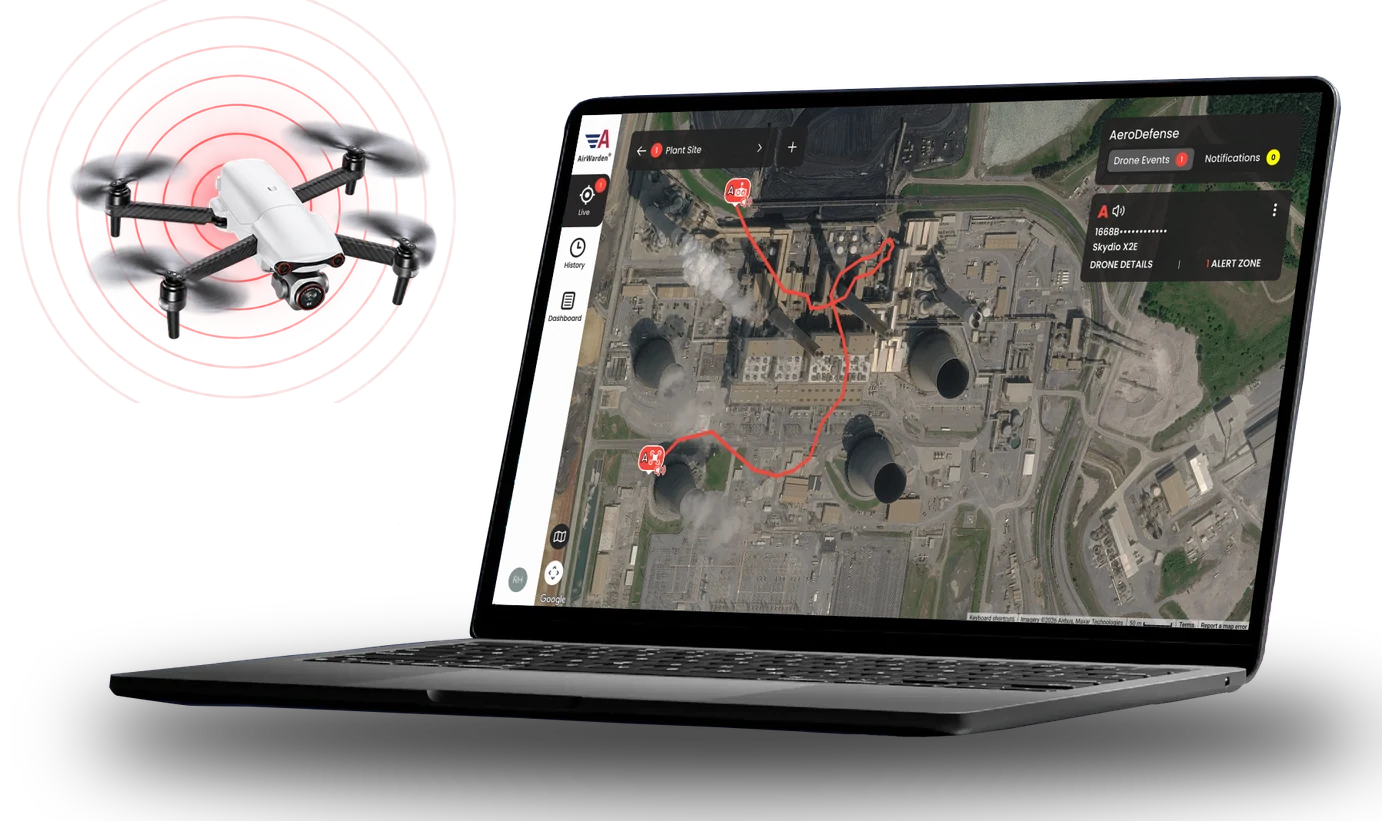
RF sensing that detects drone activity beyond Remote ID for greater airspace awareness.
What Is AirWarden Spectrum?
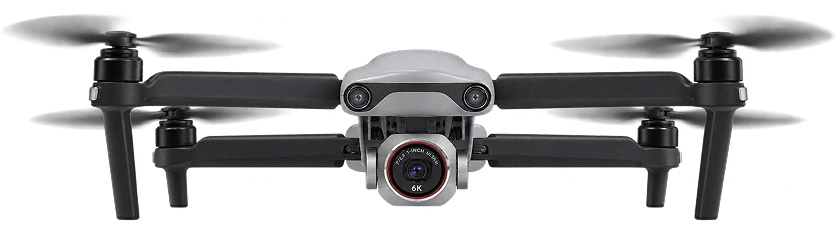
AirWarden Spectrum combines Radio Frequency (RF) spectrum sensing and Remote ID monitoring with AirWarden Essentials software. It detects drone RF activity whether or not the aircraft broadcasts Remote ID, extending awareness beyond Remote ID detection alone.
How AirWarden Spectrum Works
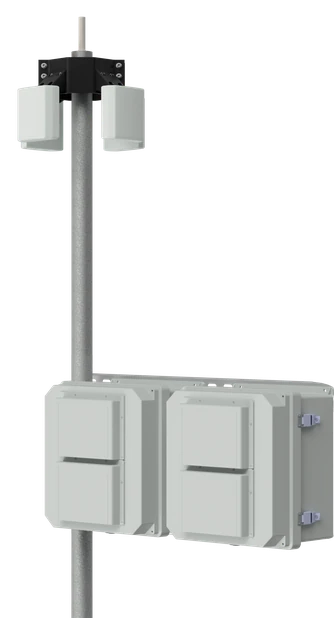
Spectrum continuously scans the airwaves for drone activity using spectrum sensing without examining signal content. A Direction Finder provides drone range and bearing, while multiple sensors work together for more precise location estimates.
WHO IT’S FOR
Who Needs
AirWarden Spectrum?
Organizations with high-security environments that are targets of intentional attacks of some sort may want to add AirWarden Spectrum as a detection layer on top of AirWarden Remote
ID detection.
Key Elements of AirWarden Spectrum
Powered by AirWarden Essentials software for live monitoring, custom alerts, and historical reporting.
Detects both Remote ID
and non-broadcasting custom drones.
Setup
Fine-tuned environmental calibration filters out
ambient RF noise.
Deployment Fit
Engineered for high-security, sensitive sites facing elevated threat levels.
Detection Range
0.5-4km beyond a sensor network perimeter.
Data Source Controls
Toggle Remote ID, Spectrum, and integrated radar data on or off in AirWarden Essentials.
The AirWarden Spectrum Hardware Overview
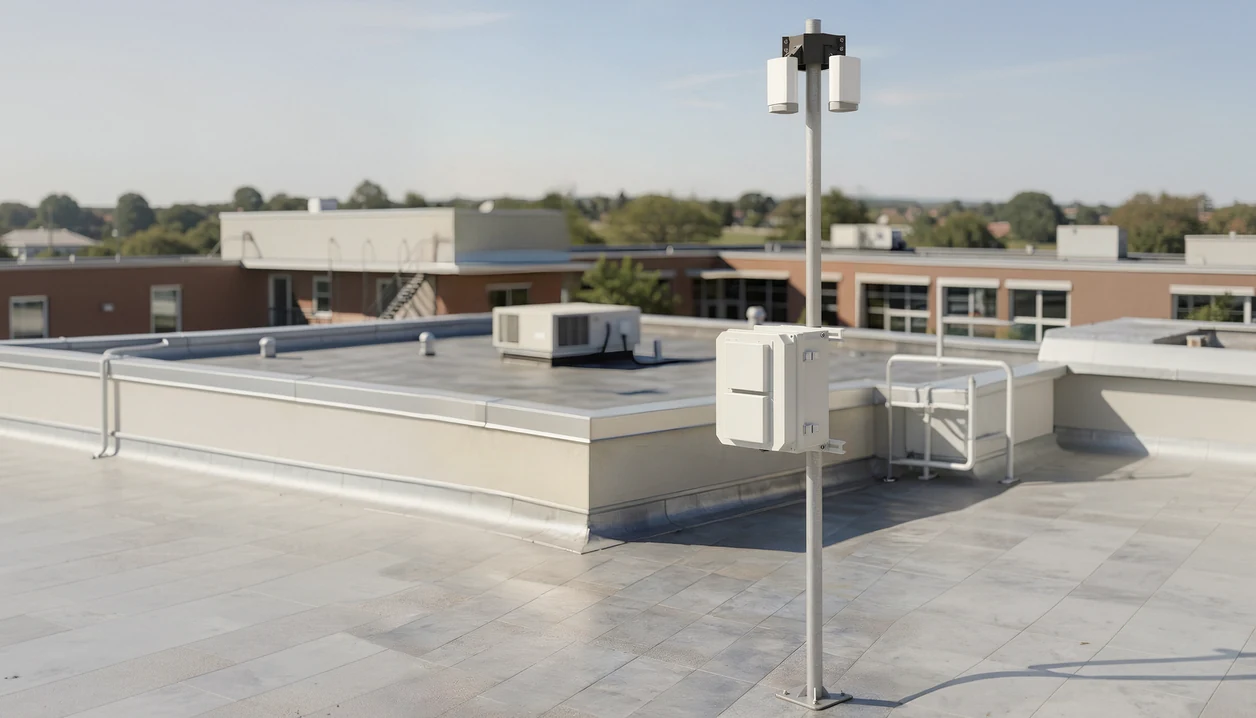
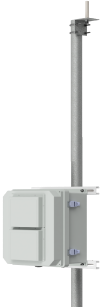
AirWarden Spectrum Sensors and Direction Finder Modules mount to existing infrastructure and are installed by trained personnel and professional electricians.
Permanent Deployment
Spectrum Sensor
Organizations typically deploy AirWarden
Spectrum Sensors in networks of three
or more sensors.
A simple deployment process designed to get your system installed,
calibrated, and ready for drone detection.
1
Survey & Install
AeroDefense conducts a remote survey to select installation locations. Personnel confirm physical, electrical, and RF suitability on-site, then install hardware.
2
Calibrate the System
AeroDefense conducts flight and environmental calibration over about two weeks to prepare the system for drone detection at your location.
3
Train & Start Detecting
AeroDefense provides your team with 30–60 minutes of training, then hands over the system so you can begin monitoring drone activity.
SPECTRUM PRICING
AirWarden Spectrum
Cost Overview
AirWarden Spectrum is a highly customizable RF drone detection system. Pricing depends on factors like sensor selection, site layout, and your specific use case.
Talk to our sales team to get a tailored quote that
fits your needs.
Protect critical environments with passive RF drone detection built
to deliver reliable situational awareness across high-security, high-risk operations.
If you're looking for a permanent drone detection solution that can detect Remote ID and even non-Remote ID drones, AirWarden Spectrum might be the right fit. But every site and mission is different.
Our team can walk you through how the system works, help you compare it to other options like AirWarden Remote ID, and show you what a networked deployment could look like for your location. Whether you're early in the process or ready for a demo, we're here to help you make the best decision for your airspace.
Thank you! Your submission has been received!
Oops! Something went wrong while submitting the form.
Looking for a Cost-Effective Solution?
If you primarily need to detect Remote ID-compliant drones, our AirWarden Remote ID solution may be the right fit.
AirWarden Remote ID delivers real-time airspace
awareness for $9,987 per site billed annually.
Get answers to common questions about AirWarden Spectrum, from detection range and RF performance to deployment, integrations, compliance, and data privacy.
Didn't find your answer? Chat with the AeroDefense Navigator for immediate assistance.
Should I choose AirWarden Spectrum or AirWarden Remote ID for my site?
While AirWarden Remote ID only monitors standard Remote ID broadcasts, AirWarden Spectrum incorporates multi-layered Radio Frequency (RF) detection to identify both FAA Remote ID-compliant and non-compliant drones flown by highly sophisticated operators.
How can AirWarden Spectrum be deployed at my facility?
AirWarden Spectrum is designed for permanent, fixed-site installations.
Will AirWarden Spectrum integrate with my current security systems?
Yes. Built on AirWarden’s open-platform architecture, AirWarden Spectrum seamlessly integrates via APIs with existing security management tools such as Unmanned Traffic Management (UTM) networks, surveillance cameras (PTZ), and supplementary radar systems.
Does AirWarden Spectrum actively transmit or access private signal content?
No. AirWarden Spectrum is a receive-only monitoring solution operating in standard open RF bands (like 2.4 GHz and 5.8 GHz). It processes publicly broadcast Remote ID messages and measures surrounding RF signal characteristics without transmitting, jamming, or reading private data exchanged between a drone and its controller.
What is the drone detection range of AirWarden Spectrum?
Detection range depends on local radio frequency interference and whether the aircraft is broadcasting Remote ID. For non-Remote ID drones, AirWarden Spectrum detects targets at ranges from up to 1 km (0.62 miles) in high-interference urban areas, up to 2 km (1.2 miles) in suburban settings, and up to 4 km (2.5 miles) in low-interference environments. For standard Remote ID broadcasts, coverage extends up to 2 km (1.2 miles) in urban areas, up to 5 km (3.1 miles) in suburban areas, and up to 7–8 km (4.3–5 miles) in low-interference or coastal environments. Multiple sensors can also be networked together to expand detection across larger operational perimeters.
Will AirWarden Spectrum still work reliably in noisy RF environments with Wi-Fi and Bluetooth?
AirWarden Spectrum is specifically engineered to operate in crowded RF environments by using fine-tuned environmental calibration to map and filter out ambient background noise. By isolating routine local chatter—such as corporate Wi-Fi networks, Bluetooth devices, and operational radio communications—the system reliably distinguishes true drone signatures from everyday signals.