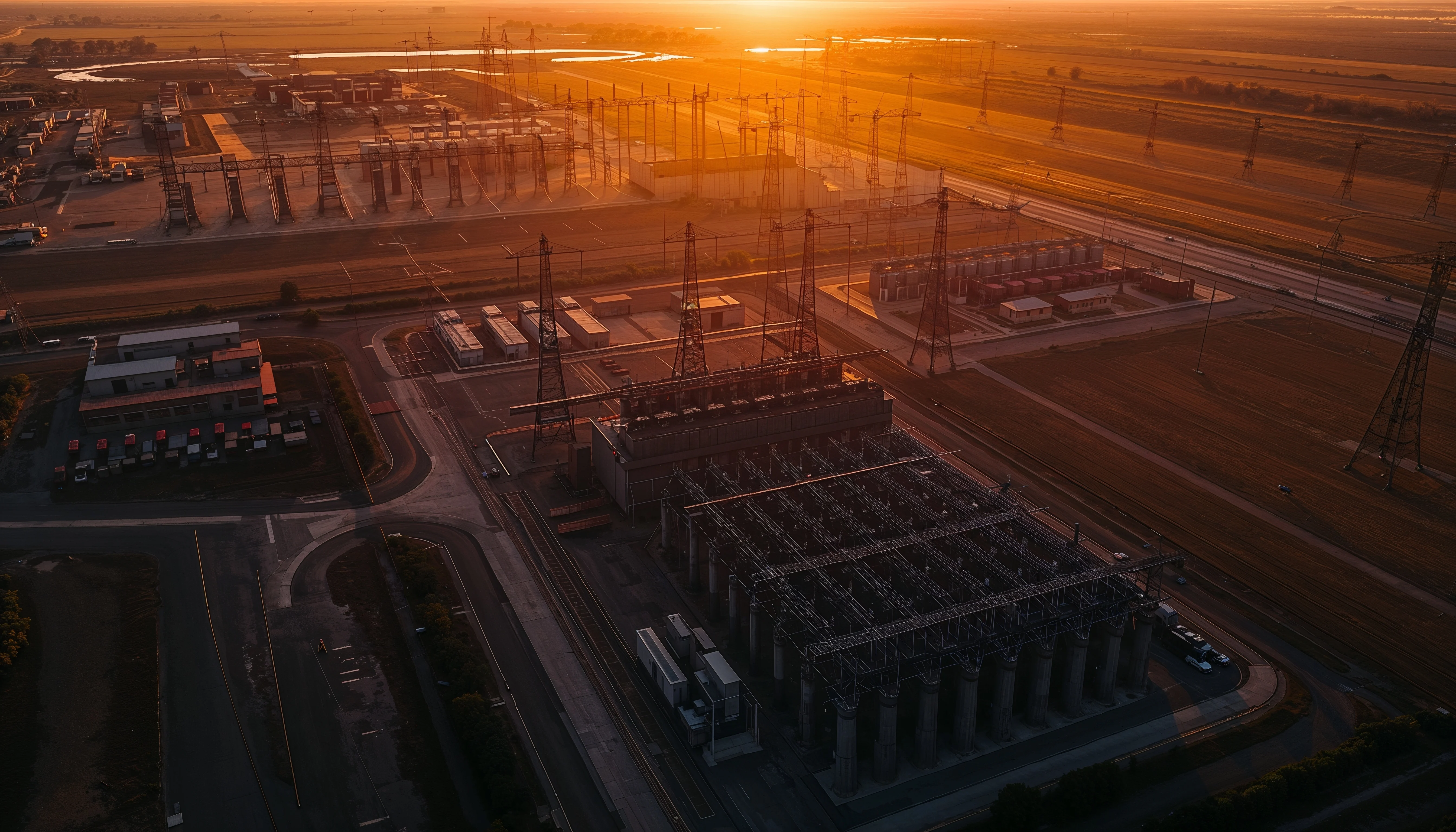
See how AirWarden® equips security teams to rapidly respond to drone activity and prevent security incidents.
THE PROBLEM
Airspace Blind Spots & Operational Risks
Limited Airspace Awareness
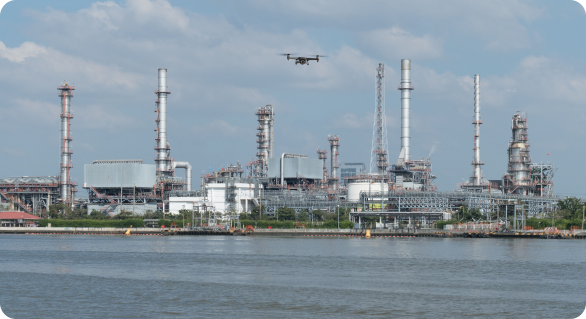
Without drone detection, security teams may have little visibility into drone activity around pipelines, refineries, and utilities, making it difficult to assess activity and determine when a response is needed.
Physical Destruction & Operational Outages
Accidental collisions or intentional drops on transformers, chemical tanks, or active runways can cause major fires, environmental damage, and costly operational shutdowns.
Cyber Interception & IP Theft
Drones carrying rogue wireless receivers can target exposed areas of data centers or manufacturing facilities to intercept networks and capture proprietary facility layouts and processes.
THE SOLUTION
Intelligence-Led Airspace Security
AirWarden transforms real-time detections and historical airspace reporting into actionable intelligence to verify incursions, locate operators, and prevent future incidents.
Verification Over Guesswork
Replace unreliable phone-in sightings with confirmed drone detections, so your team responds only when an actual incursion occurs and avoids wasting resources.
Determine Intent
Identify the drone and pilot at the same time, helping security quickly locate the operator, assess intent, and coordinate a safe, controlled landing.
Identify Trends & Prevent Incidents
Use high-fidelity reporting to spot repeat visitors, launch hot spots, and suspicious patterns early, allowing your team to intervene before a serious incident develops.
Asset-Safe Monitoring
Maintain continuous protection without jammers or disruptive RF, making AirWarden safe to operate near runways, sensitive electronics, and other critical infrastructure.
The AirWarden Response Lifecycle
A continuous approach to drone security before, during, and after an incident.
Phase 1
Continuous Monitoring
Before an Incident
Centralized Multi-Site Oversight
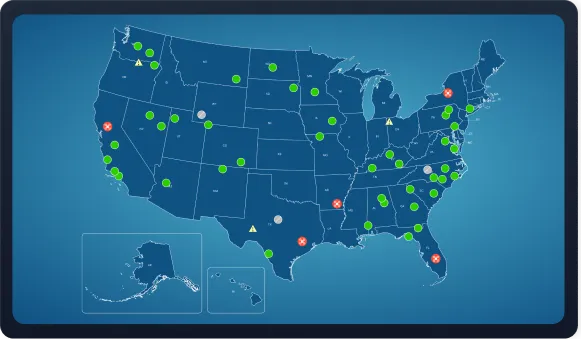
Monitor substations, pipeline segments, data centers, and other distributed locations from a single screen in real time.
24/7/365 Interference-Free Monitoring
Maintain continuous airspace awareness without disrupting facility communications or control systems, with no manual oversight required until an alert is triggered.
Custom Alert Zones
Define digital boundaries around high-consequence areas and receive instant alerts when a drone or controller enters zones such as runways or volatile storage areas.
Phase 2
Immediate Action
During an Incident
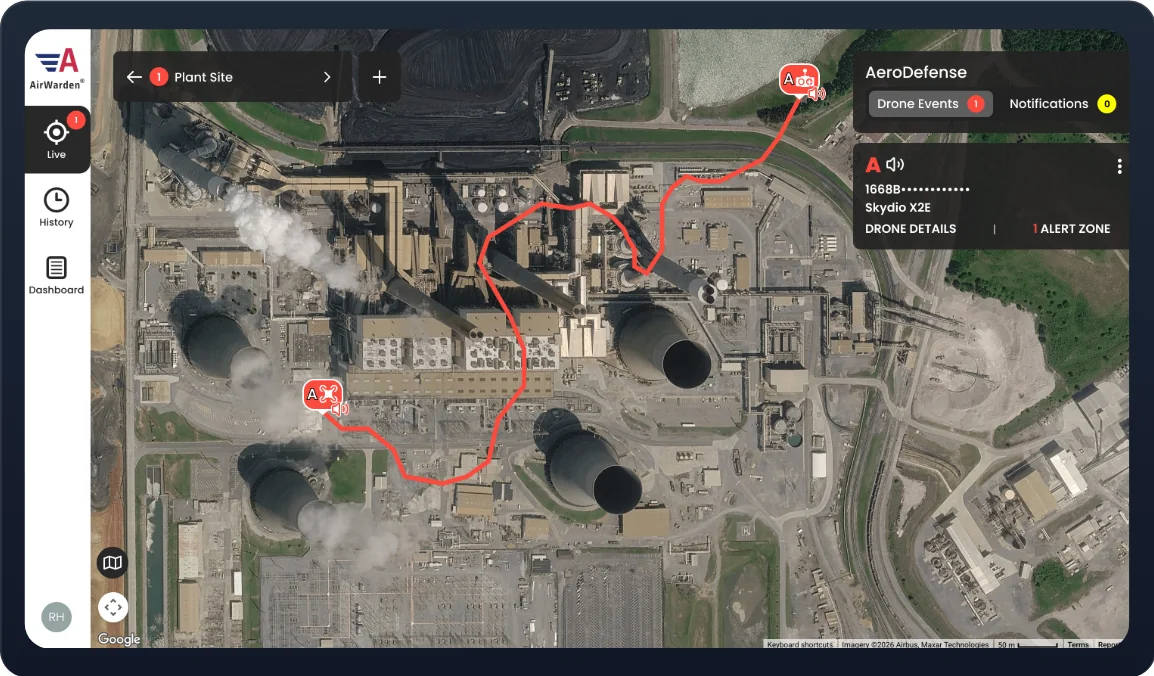
Simultaneous Drone & Pilot Tracking
View the real-time location of the drone and operator on one map, helping security assess intent and coordinate a safe, controlled landing.
Broad-Spectrum Detection
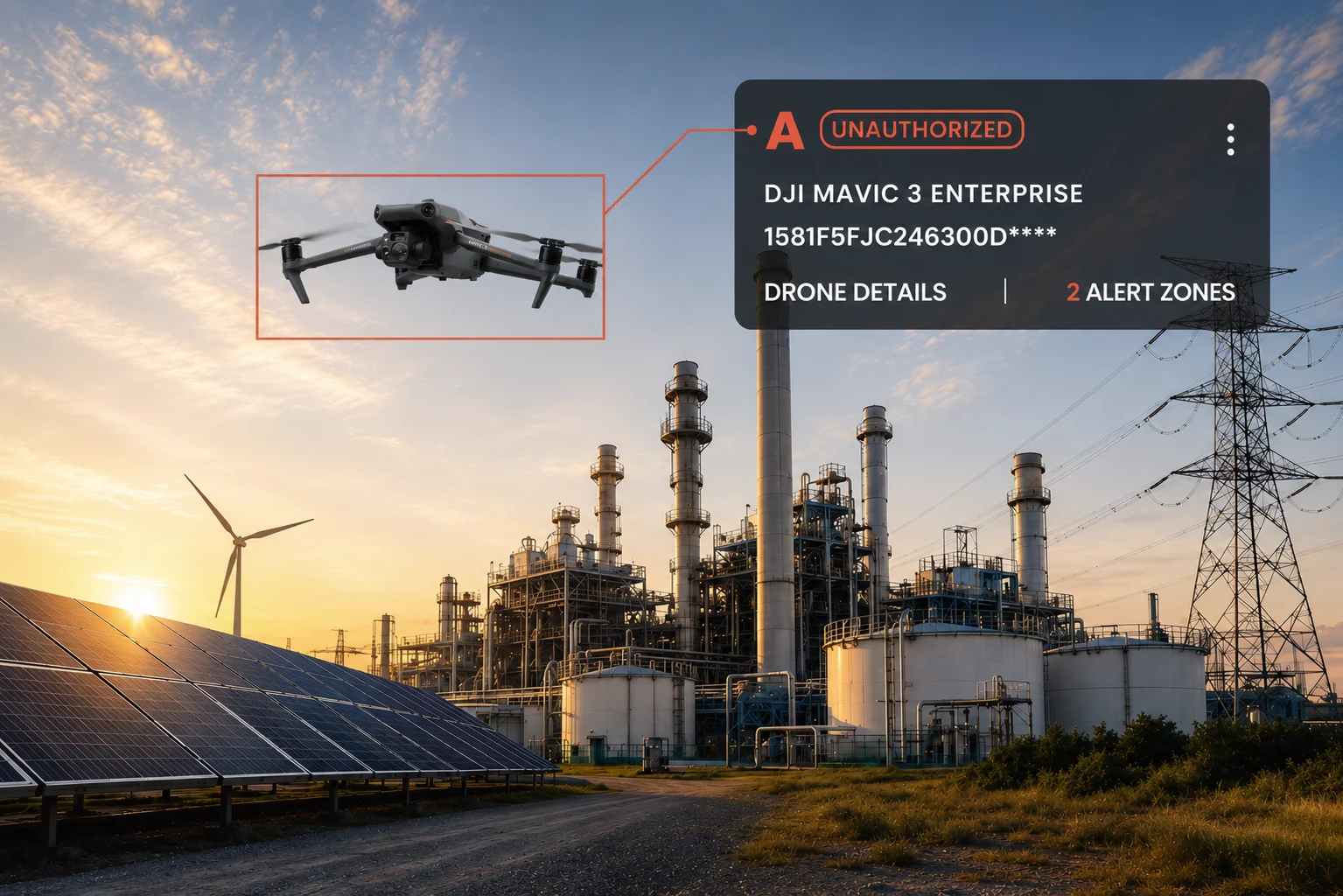
Detect a wide range of drone models across major manufacturers to maintain comprehensive airspace visibility.
Approve Trusted Aircraft
Add known drones to an approved list during a live detection or through the UI, reducing unnecessary alerts while keeping flight paths visible.
Flag Watchlist Threats (AirWarden Remote ID Only)
Add drones to a custom Watchlist from live detections or historical logs and flag them immediately if they return.
Coordinated Response
Share live flight data and pilot coordinates with on-site security, law enforcement, and response partners for a faster, coordinated response.
Phase 3
Tactical Analysis
After an Incident
Spot Pre-Operational Surveillance
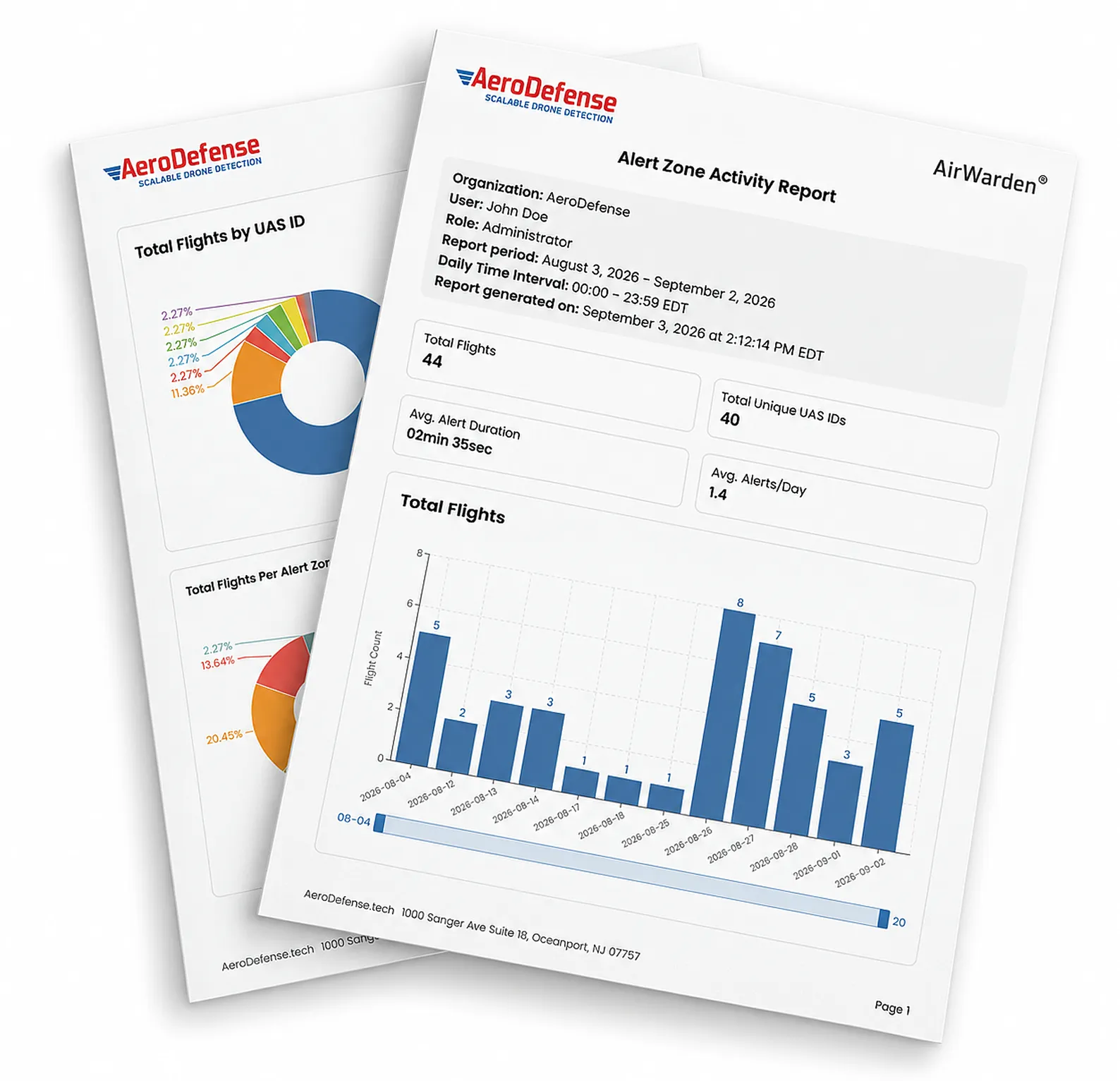
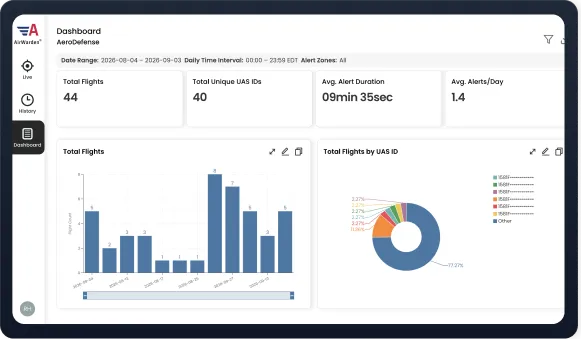
Use dashboard trends, including flight counts, alert-zone activity, and UAS ID tracking, to identify repeat reconnaissance and suspicious patterns before an incident occurs.
Export Forensic Reports
Generate flight logs and signal data to create a verified audit trail for law enforcement, regulatory compliance, and internal security reviews.
Harden Perimeter Defenses
Use historical flight data to refine patrol schedules, reposition cameras toward common launch areas, and reduce physical security blind spots.
UAFR READINESS
Prepare for the Proposed
FAA Flight Restrictions (UAFR)
The proposed Unmanned Aircraft Flight Restriction (UAFR) framework will give eligible facilities FAA-enforced airspace protection. Operators who violate an approved restriction face civil fines up to $75,000 per infraction, license suspension, or criminal prosecution.
Eligible facilities include covered fixed sites across 16 critical infrastructure sectors, including energy, chemical, and transportation. AirWarden delivers the passive Remote ID monitoring needed to support your facility’s FAA application preparation.
1
RECEIVE REMOTE ID BROADCASTS
The proposed rule calls for applicants to be capable of receiving Remote ID broadcasts within or in close proximity to the requested UAFR.
2
COLLECT DRONE HISTORY DATA
The proposed application calls for up to 24 months of available drone activity history over the facility. Build that record now before applications open.
3
PREPARE FOR DAY-1 READINESS
The FAA expects high application volume. Remote ID receiving capability and available flight data can help your facility apply as soon as the process opens.
While the FAA controls the air, local authorities control the ground. The Utilities Airspace Defense Playbook provides a practical roadmap for utility security leaders to move beyond passive observation and actively stop unauthorized flights using local legal levers and forensic RF data.
Choose the Right Protection Level for Your Facility
See how AirWarden Remote ID and AirWarden Spectrum compare. Both solutions include AirWarden Essentials software for live monitoring, configurable alerts, fleet management, watchlists, and historical reporting.
Most Popular
AirWarden Remote ID
AirWarden Spectrum (RF Sensing)
Best For
Facilities that need affordable, scalable drone monitoring with fast deployment.
High-security facilities that need to detect non-broadcasting or modified drones.
How It Works
Receives real-time Remote ID data from drones and their pilots.
Passively monitors RF signals to identify drones that do not broadcast Remote ID.
Hardware & Setup
Compact, self-installable receivers with no technicians or calibration required.
Professionally installed sensors with technician deployment and about two weeks of calibration.
Primary Advantage
Scales cost-effective, wide-range coverage with rapid deployment to track exact drone and pilot locations.
Identifies non-compliant or modified drones used to bypass standard detection.
See AirWarden in Action for Critical Infrastructure
Protect operational continuity with real-time drone detection and airspace intelligence designed for today’s critical infrastructure environments.
Request a meeting to see how AirWarden helps your team verify incursions, locate drone and pilot activity, and respond faster across facilities ranging from remote pipeline segments to complex, high-traffic sites.
Thank you! Your submission has been received!
Oops! Something went wrong while submitting the form.
Get clear answers to common questions about drone threats, regulatory protections, detection capabilities, historical reporting, and how critical infrastructure facilities can strengthen airspace security and operational resilience.
Didn't find your answer? Chat with the AeroDefense Navigator for immediate assistance.
Why is critical infrastructure at risk from drones?
Power plants, water facilities, and data centers are high-value targets because disruptions can affect thousands or even millions of people. Drones may be used for surveillance, sabotage, or access to sensitive areas, while recreational flights can also create operational and safety risks through accidental incursions, near-misses, or loss of control.
Which critical infrastructure sites are eligible under the FAA’s proposed Unmanned Aircraft Flight Restriction (UAFR) plan?
The proposed rule would apply across 16 critical infrastructure sectors, including energy, transportation, communications, critical manufacturing, healthcare, government facilities, and more. For the full list of eligible facility types and requirements, see the
Are there laws that protect critical infrastructure against drones?
Yes, but protections vary by jurisdiction. Title 42 U.S.C. § 5195c(e) defines critical infrastructure, while 14 CFR § 99.7 restricts drone flights over certain national-security-sensitive sites. Some states impose additional protections, and the proposed UAFR rule would allow eligible facilities across 16 sectors to apply for federal airspace restrictions. Our
also outlines state and local laws organizations may be able to use today.
Why are drones a threat to chemical plants and factories?
Unknown drones can create serious risks for chemical plants and manufacturing facilities through surveillance, industrial espionage, and operational disruption. High-resolution cameras and lidar sensors can capture facility layouts, sensitive processes, and proprietary information, while collisions or unexpected drone activity can damage equipment, distract personnel, or force temporary shutdowns.
What kind of reporting and historical data can drone detection systems provide for critical infrastructure?
Drone detection systems can provide detailed historical data, including time-stamped detections, flight duration, flight paths, aircraft or Remote ID information, and pilot locations. This data supports trend analysis, incident reconstruction, and intelligence gathering, helping security teams identify repeat activity, understand patterns, coordinate with law enforcement, and strengthen future risk mitigation.