Discover why unidentified drones pose widespread challenges across industries.
Understanding the Airspace Blind Spot
The hidden security gap above traditional ground-based defenses.
The Limits of Traditional Security
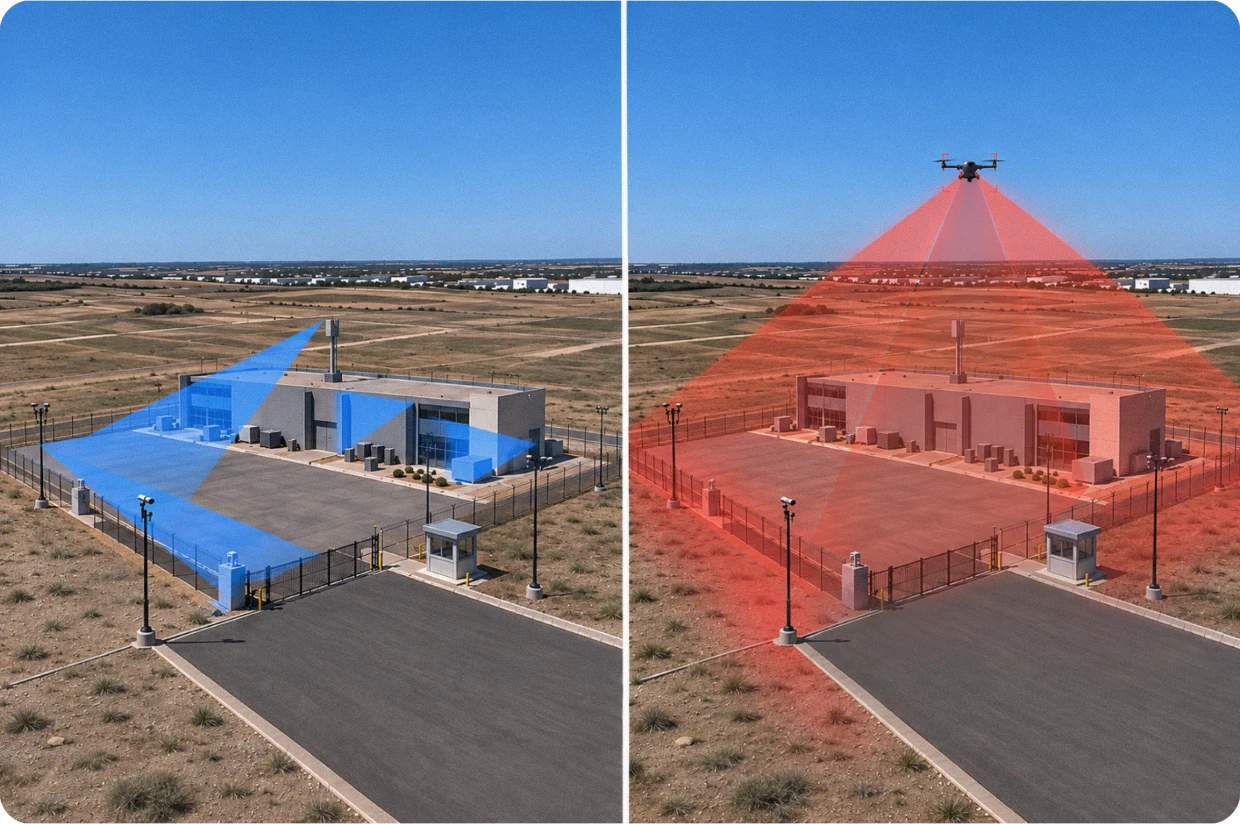
Most physical security frameworks focus on ground-level threats, leaving the airspace above facilities largely unmonitored. Unidentified drones can cross property lines silently, creating activity that may go unnoticed until it becomes a security concern.
From Detection to Identification
Many drones operate legally, but unidentified activity still creates uncertainty. Real-time drone and pilot location data helps teams assess intent, reduce blind spots, and distinguish routine flights from activity that may require a security response.
The Risks of Unidentified Drone Activity
Unidentified drone activity can create wide-ranging risks across public safety, critical operations, cybersecurity, activist activity, and physical security, with impacts spanning people, property, and infrastructure.
Safety Hazards
Interfere With Aircraft: Unknown drones near airports, helipads, and flight paths can create collision risks and disrupt manned aviation.
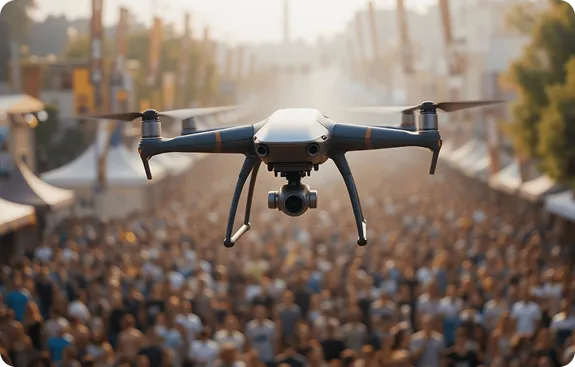
Endanger Public Safety: Drones over crowds and public venues can create collision or falling-object hazards, risking injury, panic, or disruption.
Operations Disruption
Interfere With Emergency Response: Drones can obstruct first responders and law enforcement during emergencies.
Disturb Public Events and Gatherings: Drone activity can cause delays, interruptions, and safety holds at public events.
Interrupt Utility & Infrastructure Operations: Drones can force shutdowns, delay maintenance, and disrupt critical services.
Unauthorized Surveillance & Cyber Threats
Cyber Attack: Drones can deliver malicious hardware, intercept wireless signals, or exploit nearby network vulnerabilities.
IP Theft & Espionage: High-resolution cameras and LiDAR can capture sensitive data and detailed facility layouts.
Activist & Protester Operations
Unauthorized Documentation: Unknown drones can capture high-resolution footage of site activities for targeted public campaigns.
Disruptive Presence: Hovering over events or facilities can draw attention, create public pressure, and disrupt operations.
Media & Advocacy Campaigns: Live-streamed aerial footage can amplify activist messaging and influence public perception.
Physical Security Risks
Contraband Smuggling: Drones can bypass ground security to deliver prohibited goods into prisons and other restricted sites.
Targeted Attacks: Drones can carry hazardous materials, explosives, or weapons toward sensitive locations.
Extend Security Beyond the Ground
Ground security alone is no longer enough. Airspace awareness helps teams detect unidentified drone risks earlier and maintain visibility throughout an incident.
Real-Time Response
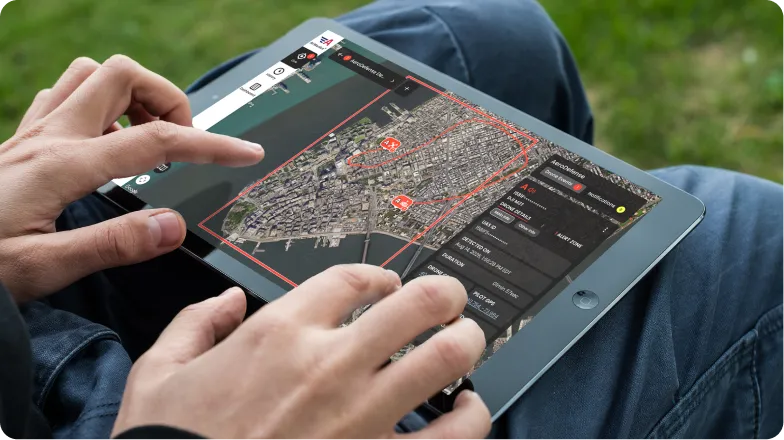
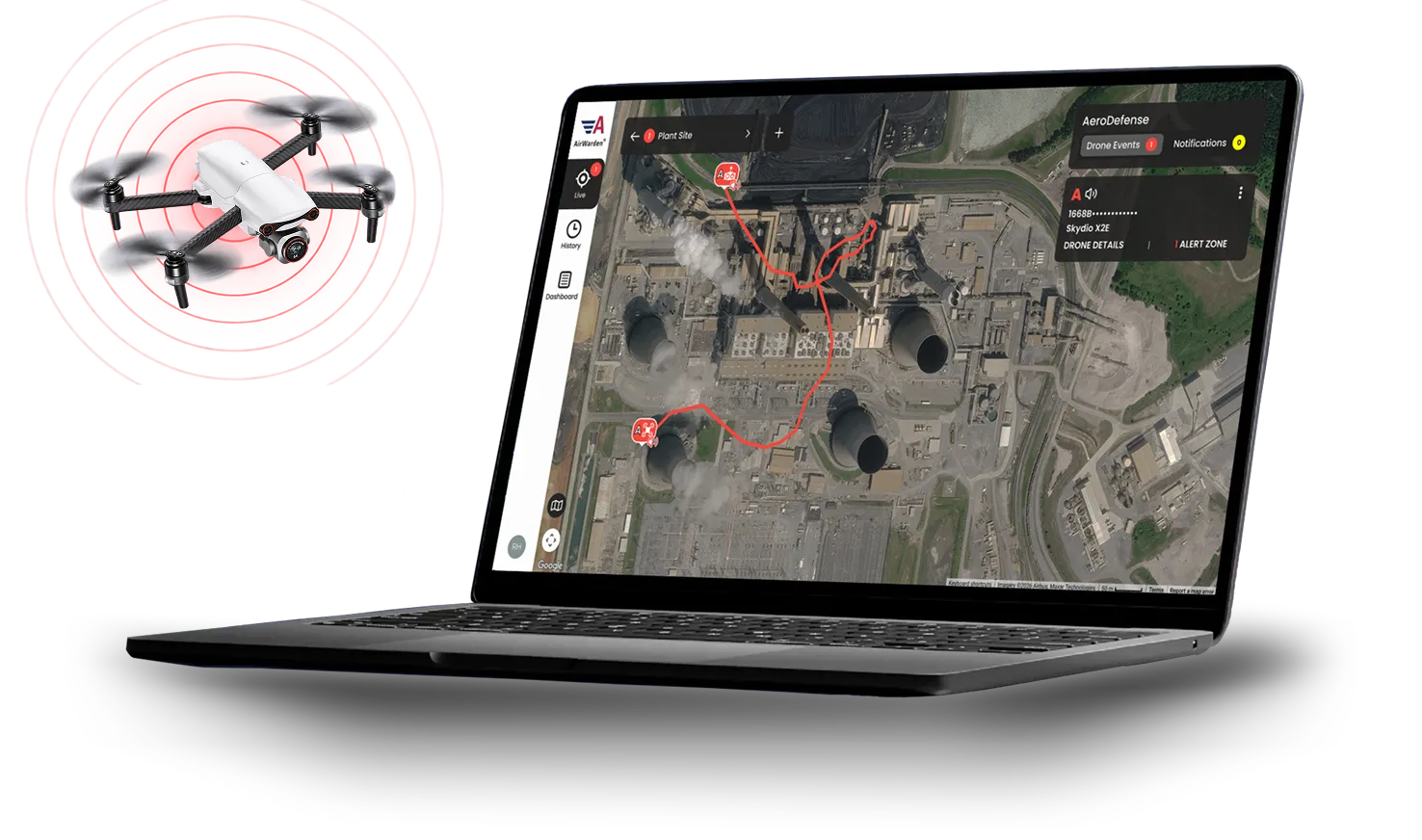
Pinpoint live aircraft and pilot locations to support faster field response and generate records of active incidents.
Dashboard Intelligence
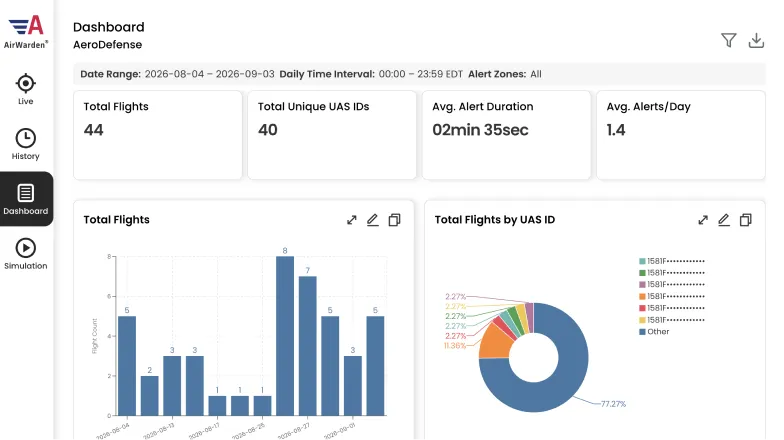
Analyze Total Flights, UAS ID breakdowns, Alert Zone activity, and Hourly Flight Counts, with exportable reports for security audits.
Flight Path Forensics
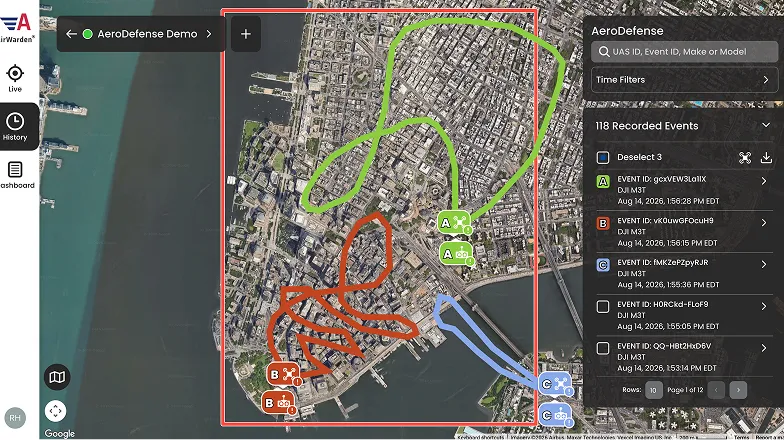
Review historical flight paths, document incidents, and export records for investigations, law enforcement, and legal review.
Explore Industry-Specific Drone Risks
Discover how unidentified drone activity creates distinct safety, operational, and security challenges across industries.
Understand the risks unidentified drones create, how detection supports faster response, and how AeroDefense helps security teams maintain awareness of activity around critical sites.
Didn't find your answer? Chat with the AeroDefense Navigator for immediate assistance.
How do unidentified drones threaten public safety?
Unidentified drones can disrupt events, interfere with emergency response, or create hazards near crowds and aircraft. Without knowing who the pilot is or their intent, security teams cannot respond proactively, increasing the risk of accidents or incidents.
Can unidentified drones be used for illegal activities?
Yes. They can be used for smuggling, surveillance, trespassing on restricted areas, or even cyber intrusion. Detecting the drone and locating the pilot is critical to prevent these security risks.
What is “airspace awareness” and why is it important?
Airspace awareness refers to the ability to detect and track drone activity near a site. It is essential because it provides early warning of potential threats and allows security teams to respond to both drones and their operators.
How can drone detection systems help identify unidentified drones?
Drone detection systems can locate drones in real time, identify the pilot’s location, and provide alerts before drones reach sensitive areas. This enables informed, timely security responses.
What types of facilities are most at risk from unidentified drones?
High-risk locations include critical infrastructure, stadiums, airports, prisons, and public event venues. Any site where safety, security, or operational integrity matters can be targeted by unauthorized drones.
How does AeroDefense help solve the unidentified drone challenge?
Through the AirWarden® product line, AeroDefense offers tailored detection solutions—from Remote ID broadcast monitoring to advanced RF spectrum sensing and direction finding—to pinpoint drones and pilot locations. Backed by real-time alerts and historical analytics, AirWarden converts complex airspace data into actionable security intelligence to protect critical assets.